Website Link


FOR MORE INFORMATION ABOUT THE FAMILY NAME PLEASE VISIT OUR FAMILY HISTORY WEBSITE - https://titheradgefamilyhistory.wordpress.com/

JOIN OUR FAMILY HISTORY FACEBOOK GROUP, (A GROUP FOR ANYONE INTERESTED IN THE FAMILY NAMES) - https://www.facebook.com/groups/titheradgegenealogy/

ARE YOU RELATED TO ANYONE WITH THE FAMILY NAMES? IF SO PLEASE EMAIL ANN AT titheradgegenealogy@gmail.com

Wednesday, 19 September 2018

When is a Tytheridge not a Tytheridge?


Several years ago, I was very excited when I found the name of Ernest Burrowes Tytheridge, listed under "Soldiers Died in the Great War 1914 – 1918" on the Ancestry website.
The details were transcribed from the original and read:
Name : Ernest Burrowes Tytheridge
Place of Birth:  Islington, Middlesex
Date of Death:  26 October 1914
Place of Death: France and Flanders
Enlistment Place:  London
Rank:  Rifleman
Regiment Royal Irish Rifles, 2nd Battalion
Regimental Number:  6486
Killed in Action

I followed my golden rule - "look at the original document and don’t believe any transcription". I found the image of an original document “Ireland, Casualties of World War I, 1914-1922” which contained the names of Irish men who fell in the Great War. The picture showed the page which remembered Ernest, and it confirmed the details of the previous transcription. The book of remembrance was beautiful, published in 1923 with the printed word surrounded by the most amazing ornate border designed by the artist, engraver and stain-glass window designer Harry Clarke.

My discovery of Ernest Burrowes Tytheridge was interesting because I didn’t know who Ernest Tytheridge was. So, began my search for Ernest. I looked for a birth- no Ernest Tytheridge, no Ernest Burrowes. I searched on the 1911 no sign of Ernest. I tried all possible spelling variations of the surname Tytheridge and found nothing. I looked in vain for a connection between Tytheridge and Burrowes but none was found. For several years I had labelled Ernest as "a problem to sort" and from time to time I would try some different search to try to find out who he was.

Recently I was updating my military records for our website, where I had Ernest Burrowes Tytheridge listed among the war dead. I realised that I had no medal card for Ernest, that seemed strange but I thought perhaps it was because he was in an Irish Regiment. As I was cross checking my data with the Commonwealth War Graves Commission I realised that Ernest was not listed there either. The alarm bells rang something was not right. It was at this point I had a brainwave - l entered just the Christian names “Ernest Burrowes” into the Commonwealth War Grave Commission website and the answer to the mystery was revealed. The entry read
“Ernest Burrowes TYTHERLEIGH”
Ernest was not a Tytheridge but a Tytherleigh !

To confirm this new discovery, I searched the surname Tytherleigh and found his medal card, his birth in 1884 Islington, his marriage to Georgina in 1910 and found the couple on the 1911 census in Finchley. So my Ernest Burrowes Tytheridge was not Tytheridge after all, the error had been made on the original Roll of Honour  just after World War 1 and then copied to another document.

I always pride myself on not making assumptions but as shown above even when you are careful things can go wrong. When doing genealogy research try to remember:
  • Always try to see the original document – don’t believe transcriptions 
  • Always try to cross reference your fact from two different sources
  • If something doesn’t seem right don’t blindly accept it; question it. (I should have had a warning alarm ringing and asked why no birth? why no medal card? why not in CWG site?)

 I have now updated our website to remove all traces of Ernest, the Tytheridge who was a Tytherleigh, from both the Military Records Roll of Honour and from the list of Soldiers whoserved in WW1.


Tuesday, 11 September 2018

Smallpox and the Death of Joshua Titheridge 1741


Smallpox a common cause of death


In the 17th and 18th century smallpox was a common cause of death. It caused the death of rich and poor alike. It killed several reigning monarchs including Queen Mary II of England, Czar Peter II of Russia and King Louis XV of France. On 10th October 1562 Queen Elizabeth I was taken ill at Hampton Court Palace, with what was thought to be a bad cold, this developed into a violent fever. The queen had smallpox and it was feared that the she would die. Fortunately, Elizabeth survived the disease and was not too badly scarred. It is estimated that in Europe at this period 400,000 commoners died each year due to smallpox.

Smallpox is an infectious disease caused by a virus. It is an extremely contagious and deadly virus for which there is no known cure. The person is infectious from the when the fever develops until the last scabs fall off. Smallpox is transmitted from person to person contact and has an incubation period is 7 to 17 days. Smallpox causes a high fever, flu like symptoms of malaise, vomiting, headache and this is followed by a characteristic rash that develops 2 - 3 days later, the rash develops into pus filled blisters. Smallpox kills a third of those infected with the disease, while those who survive often suffer from bad scarring with deep pitted scars, most prominent the face.

Survivors of the disease were often called upon to try and nurse victims as it was known that no one could contract smallpox twice. In 1796 Edward Jenner, an English doctor, carried out an experiment that lead ultimately to the eradication of smallpox. He took pus from a milkmaid with cowpox and inserted it into a young boy. Later he exposed the boy to smallpox and no disease developed. The vaccine had been successful, and this was the start of vaccination against infectious diseases. Smallpox vaccination spread around the world and saved the lives of millions. In 1980 the World Health Organisation certified the global eradication of smallpox. The last naturally occurring case was in 1977.

Did Your Ancestors Die of Smallpox? 


The chances are you would not know your ancestors died of smallpox unless some kind parish clerk has recorded the cause of death in the burial registers. In the parish of Basingstoke in the 1740s the parish clerk has done just that. It shows that in 1741 there was an outbreak of smallpox in Basingstoke. In April 1741 there was one death due to smallpox and none between May and August. However, between 9th September and 30th September there were 15 smallpox deaths recorded. In the month of October the epidemic reached a peak and there were 61 smallpox deaths. The figures reduced to 29 deaths in November and just 5 smallpox deaths in December. In the 18th century Basingstoke was a small market town. Even by the end of the century there was only a population of 2,500, so the death of 105 individuals from smallpox in 1741 was quite a significant decrease in the population.

Joshua Titheridge


One of the individuals who suffered from this outbreak of small pox was Joshua Titheridge. The parish records show he was buried on 22 September 1741, buried in cloth and died from small pox.

So, who was Joshua? Joshua was baptised on 21 June 1701 one of 10 children born in Kingsclere, Hampshire to Joshua Titheridge and Margaret Butt (sometimes recorded as Bull). The Titheridge surname is also recorded as Titteridge, Tytheridge and Tetheridge. Joshua married Anne Moore on 3 November 1735 in Basingstoke and they had three children Anne who was born and died in 1735, a second daughter called Anne who was born in 1737 and John who was born in September 1740 and died in May 1741 just a few months before Joshua. Joshua was just 40 years old when he died from smallpox; his widow Ann lived another 40 years, her burial being recorded in December 1781 in Basingstoke. After the death of Joshua's nephew, Richard, in Basingstoke in 1785 the Titheridge line in Basingstoke dies out.

The Titheridges of Kingsclere and Basingstoke 

(Click on the family tree to enlarge it)


Sunday, 2 September 2018

Francis Titheridge 1854 -1941 (Part 2 covering 1901 to 1941)


Fareham Cemetery
This Blog continues the story of Francis Titheridge in the last blog (please read part 1 first). The story begins in 1901

1824 Vagrancy Act


To set the scene for Francis’s story you need to know about the Vagrancy Act. This act was passed in 1824 by the English Parliament making it an offence to sleep rough or beg. It was a law that criminalized those who were homeless and forced to beg for survival, irrespective of why the individuals were placed in this predicament. It meant anyone found begging could be arrested and sentence to imprisonment. Francis was one of the unlucky individuals who fell afoul of the act.

County Asylum 1901 – 1919


Four years after the last reference to Francis came the 1901 census, this was taken in April 1901. Francis was living on his own in Up Marden, Sussex occupation given as carter on farm and marital status single. By the 1911 census Francis is recorded as an inmate in West Sussex County Asylum in Graylingwell situated on the outskirts of Chichester. He was recorded as a farm labourer, 49 years old and a widower. Reviewing the records for the Asylum they show that Francis was admitted on 8 October 1901 and was discharged on 8 August 1918 stating he was recovered. With the advent of World War 1, the asylum was requisitioned to act as a military hospital with the patients being redistributed through other asylums within the south east. Francis’s records have Canterbury written on them, so we can assume he was transferred to Kent. It was here in Canterbury he was released in 1918. Can you imagine how he felt after release from the asylum after 17 years? England was now a country at war with Germany, Francis had no job, no means of support, and was miles from home.

Begging in Kent 1919


Six months after his release this article appeared in the Kent papers.

Article from Kent and Sussex Courier - 28 February 1919
Headline: “Tunbridge Wells Borough Bench – Not Wanted”
Francis Titheridge was charged with begging alms on Mount Ephraim 25th February. P.C. Huckstep stated that when searched at the Police Station a sum of 5 shillings and ten and a half pence in coppers was found on the prisoner. The Chief Constable (Mr Charles Prior) said complaints had been received of defendant’s conduct. He first gave his age as 80, then 70 and finally 69 years. Upon promising to leave the town Titheridge was sentence to one day’s imprisonment, the chairman telling him that he was not wanted in Tunbridge Wells.

Begging in Hampshire 1919-1928


Three months later 64-year-old Francis made it home to Hampshire. A series of newspaper articles tell his story over the next nine years.

Article from Hampshire Telegraph - 30 May 1919
Headline: Havant and Emsworth News of the District – Occasional Court
On Monday, before Mr. S. E. Mills, an elderly vagrant name Francis Titheridge was charged with begging. P.C. Old arrested him in Market Lane about nine o’clock. He was calling at houses telling a tale about having been invalided from the Army and trying to raise a breakfast. Prisoner, who admitted the charge, was sentence to one day’s imprisonment.

Article from Hampshire Telegraph - 6 June 1919
Headline: Petersfield and District – Prison for Beggar
An elderly man named Francis Titheridge was brought before Dr Cross at the Police-court, on Monday, charged with begging in the High Street the previous evening. P.C. Arnold gave evidence, and accused, who was before the court for a similar offence only a week or two ago, was sentenced to seven days’ imprisonment.

Article from Hampshire Telegraph - 24 November 1922
Headline: Fareham and District – Begging at Porchester
At a special Police Court at Fareham on Tuesday, before Mr V. T. Keen, two men named Francis Titheridge and William Henry Walker, were charged with begging at Porchester on the previous day. P.C. Hill deposed to seeing the accused calling from house to house. Titheridge pleaded guilty and there being four previous convictions against him, he was sent to prison for seven days, while Walker who pleaded not guilty and against whom there was no previous offence, was sentenced to one day’s imprisonment.

Article from Portsmouth Evening News - 30 November 1923
Headline: Gosport Light Police Court
Francis Titheridge (82), a tramp of no fixed abode, was questioned by P.C. Seamark for begging alms in Oak Street, Gosport, on November 29, when 5 shillings in coppers were found in his possession. Titheridge, who bears a bad record, was sent to prison for a month.

Article from Portsmouth Evening News - 8 January 1924
Headline: Court Gosport Police - A Beggars “Rest”
With a very bad record as a rogue and vagabond, Francis Titheridge (77), a tramp, was given a ticket of admission to the House of Industry, and told that must stop there. From the evidence of P.C. Kemp, the prisoner begged alms in Upper South Street on Monday, with excuse that he wanted to get enough money for a bed, but when searched 7shillings 7 pence was found in his possession.

Article from Hampshire Telegraph - 26 October 1928
Headline: Petersfied and District Old Enough to Know Better
Francis Titheridge (86) was brought before Dr Cross (presiding) and Mr. E. J. Baker at the Petersfield Police Court on Tuesday charged with absconding from the Petersfield Poor Law Institution on Sunday and taking with him goods to the value of 1 pound 10 shillings, the property of the guardians. The accused pleaded guilty. Mr W. Ixer, Master at the Institution, said that on Sunday morning the accused was missing. He was found by the police at Havant and taken by P.C. Turrell to Petersfield. He said he only wanted to get out to see his sister. Supt Ellis said there were numerous convictions against the accused, mostly under the Vagrancy Act. He was 86 of age, and old enough to know better. In answer to the Chairman (Dr Cross), accused express his willingness to go back to the Institution and remain there.

Fareham Poor Law Institution 1939 – 1941


In 1939 a register was taken of everyone in Britain. Francis was recorded at Fareham Poor Law Institution, 52 Wickham, Fareham
The entry reads: Francis Titheridge patient born 25 December 1846

Francis’ death was recorded in March quarter of 1941 in Gosport District, Hampshire aged 94. His actual age was 87.

Francis was buried on 1st April 1941 at Fareham Cemetery in grave 3572. His gravestone is no longer standing but an X on the right of the picture below marks the position of the grave.

Francis's burial place in Fareham Cemetery
- marked with an X


Sunday, 26 August 2018

Francis Titheridge 1854 -1941 (Part 1 covering 1854 to 1897)


Chichester  Cathedral
Francis lived in villages near Chichester
This is the life story of Francis Titheridge. It will be told in two consecutive blogs.

 A few months ago, Francis was just a name on a family tree with a date of birth and marriage. After a chance reading of a newspaper article I became curious and started to investigate this individual. Amazingly for a poor agricultural labourer I have found over 35 references to Francis in historical records. His life story has been constructed from records in various sources (Birth Marriage Death Records, Parish Records, Censuses, 1939 Register, Newspapers, Military Records, Asylum Records, Petty Session Records and Cemetery Records).

The records show life was not kind to Francis, life was hard and set in a time when social services did not exist and support for the poor and mentally ill was lacking.

Francis Titheridge of East Meon


Francis was born in 1854 in the Hampshire village of East Meon. He was the youngest of fifteen children born to William Titheridge and Elizabeth Lee; his parents were in their late forties when he was born. He was born 27 years after William and Elizabeth’s first child and 5 years after his nearest sibling. On the 1861 census he was living with his parents at Frogmore, East Meon and on the 1871 census he was living with his older brother in Old Down, East Meon. After this time Francis’s age is very inconsistent on documents, with his year of birth varying from 1839 – 1856. To confuse matters further his name is sometimes abbreviated to Frank.

First Marriage to Emily Jane Port 1877 -1882


On 13 October 1877 Francis married Emily Jane Port in East Meon. They had one child Henry born March 1879. On the 1881 census Emily and son Henry are living in Farlingham near Portsmouth, however Francis is not with them and I cannot find him on the census. Tragedy struck in 1882 when Francis was widowed, Emily’s death is registered in the December quarter in Midhurst, Sussex. In East Meon church yard there is (or was) a headstone for her, the inscription reads "To the memory of Emma Jane Titheridge, who departed this life 24 Oct 1882, age 31". She was married as Emily Jane but her death was registered as Emma Jane. There is no further record of the son Henry.

Army Service 1882-1883


On 5 December 1882 Francis joined the army, less than 3 months after Emily’s death. He joined the Royal Artillery as a driver at Fort Rowner, Gosport and was found fit for service. He was described as five feet four and half inches, 130 pounds with a fair complexion, dark blue eyes and brown eyes, age 23 years 11 months, with Methodist as his religion. The form notes “Scar above left orbit which he states is the result of an injury from a fall ten years ago”. The army did not suit Francis and he managed just 219 days of service of which 55 were spent in hospital. His service record shows on 28 February 1883 he had a fall off his horse at drill and had a contusion of his arm and was in hospital for 22 days. Released on 22 March just six days later he was re-admitted to hospital for a dislocated shoulder. He spent 33 days in hospital being released on 30 April. On 12 May he left his sentry post and was then subject to court martial for “leaving sentry post and injuring clothing” He was tried and sentenced on 24 May. On 28 May he was brought before a Medical Board and was found “unfit for service for defective intellect”. It states the deficient intellect was due to an accident before enlistment. It is noted that he was slovenly and bad tempered. He was invalided out of the army on 10 July 1883.

Court Appearance 1885


Article from Horsham Petworth Midhurst and Steyning Express – 27 January 1885
Headline: Petersfield Theft from the Workhouse
Francis Titheridge, a pauper, pleaded guilty to stealing a cape, value 6 shillings, the property of the Guardians of the Petersfield Union, on the 5th inst. – Prisoner had been an inmate of the workhouse, and, on leaving, took with him the cape, which was used by a pauper who came into the town on errands. The prisoner took the cape to Chichester and sold it for 1 shilling to a general dealer. – A previous conviction was proved and prisoner was sentenced to three months hard labour.

Second Marriage to Alice Emma Langrish 1886 – 1892


Three years in later in 1886 32-year-old Francis married 18-year-old Alice Emma Langrish from Compton in Chichester. The couple lived on the Sussex Hampshire border and led a very nomadic life with Francis working as a labourer and moving around regularly.
1887
Minnie Catherine was born on 1 April 1887 in the Westbourne district Sussex, probably in West Marden
1888
Mabel was born in the June quarter in Droxford but christened in East Meon, Hampshire on 4 November 1888. The family were living at Coombe, East Meon
1889
Mabel was 1 year old when she died. Mabel’s death was registered in Fareham and she was buried at St Mary, Porchester, Hampshire on 7 August 1889.  (A previous blog has already told of the death of daughter Mabel).
1890
Florence Mary was born in East Meon and christened on 8 January 1890. The family were living at Drayton, East Meon
1891
The 1891 census shows Francis and Alice with children Minnie and Florence at South Street, Compton, Sussex
On 19th October 1891 Minnie started school at Stoughton, Sussex having come from a school at Compton
1892
William George was born in the March quarter in Westbourne and christened in Stoughton, Sussex on 20 Mar 1892. The family were living in Walderton, Stoughton.
On 25 March 1892 Minnie left school at Stoughton Sussex for an unknown destination.
Florence Mary was just two years old when she died on 18 September 1892. Florence’s death was registered in Midhurst, Sussex and she was buried at Heyshott, Sussex.

It appears that Alice and Francis separated sometime between 1892 and 1894. On the 1901 and 1911 census Alice is living in Aldershot with Robert Cannings. They are calling themselves man and wife, although there is no record of a divorce from Francis and no record of marriage to Robert. On the censuses there are 11 children recorded living with Alice and Robert all with the surname Cannings. However Minnie born in 1887 and William born in 1892 are Alice’s children from the marriage with Francis and should be called Titheridge. The first child registered to Robert and Alice is born in 1894. In 1904 daughter Minnie reverts to the Titheridge surname when she marries a soldier William Allen in Aldershot, she gives her age as 19 but she was only 16.

Arson Charge 1897


After 1892 the next record of Francis is found in a newspaper article of 1897.

Article from Portsmouth Evening News - 09 February 1897
Headline: Farm Fire at East Meon - Charge of Arson
At Petersfield, on Monday, Francis Titheridge was charged on suspicion with arson. On Saturday night a fire occurred at Coombe Farm, East Meon, the stable being gutted and three horses burnt to death. Prisoner had had charge of the horses for one week, and was allowed to sleep in the stable. He was seen looking at the fire, refusing, it was alleged, to assist at extinguishing it, and when told that the horses were in the stable, exclaimed, “Oh let them burn”. He was remanded.
The article only says "suspicion of arson" and that he was remanded. Inspection of Petersfield Petty Sessions Minute Book at the Hampshire Record Office showed that Francis was remanded until 11th February and on this appearance the case against him was dismissed.

Story to be continued in next Blog……

Monday, 20 August 2018

Are You Related to Alfred George Titheridge (1880 - 1919)?

Shedfield Bellringers 
Alfred is second from the right


Alfred George Titheridge was born 1880 and died 1919.

 Alfred was the son of Charles Henry Titheridge and Elizabeth Emery and was born in the Droxford area of Hampshire. 


He married Rosa Downs in 1902 and they had 5 children?  

Gertrude b 1902
George b 1903
Dorothy b 1907
Florence b 1910
Margaret b 1915


Article from the local paper May 1919


Shedfield - In Memorium

Alfred Titheridge (buried 26th April) aged 38.


We have to record with deep regret the loss of another soldier of the war. Alfred Titheridge joined up in June 1916 and was in France until the end of the year, when he went into hospital. After a course of treatment in England until January 1917 he was detailed for a time to agricultural work at Raglington Farm in our parish. However, his health did not allow him to continue work and he was discharged in November last. He went afterward to Netley Hospital for treatment and died on 23rd April after an operation. He had been a member of the bellringer’s band for eighteen years and their captain for the last seven years and during that time, except for his military service, he had been employed in the Shedfield Lodge gardens. He bore his illness with great cheerfulness and courage and sincere sympathy will be felt with Mrs Titheridge and he family in their bereavement."

Correspondence Recieved


Today I received this email 


Hi

I have recently come across your website and wondered if you could help please?
I am a member of Winchester and Portsmouth Diocesan Guild of Church Bell Ringers (https://wpbells.org) and it has been suggested that some Towers in our District may like to ring during August or September to remember those ringers who lost their lives from the First World War.
I undersand Alfred George Titheridge was captain of the bellringers at Shedfield and died 23/4/1919 following medical discharge. 
The current tower captain at St. John's Shedfield - Betty Daysh - may be ringing a quarter peal - do you think any of Alfred George's descendants would be like to be present during the ringing and if so would you be able to contact them?
Regards


If you are related to Alfred George Titheridge please email me at titheradgegenealogy@gmail.com and I will give you the email address to contact.

Saturday, 11 August 2018

30 Years of Family History Research

This month sees us celebrate 30 years of genealogy research into the family name. We began with the Titheradge surname, but quickly realised that we needed to expand the study to include Titheridge, Tidridge and Tytheridge as the various spellings were interchangeable in the olden days.

Starting Our Research


We started our research because we got fed up with people commenting – “Titheradge that’s a strange name, where does it come from?” We didn’t know; so in August 1988 we decided to try to find an answer. Of course, genealogy isn’t that straight forward and the more we discovered the more questions arose that needed answering.

Our first attempt at research was a visit to Brighton library. As we stood looking at the genealogy bookshelves, unsure what to look at first, we met Albert. Albert was an elderly gentleman, a member of Sussex Family History Society, who was keen to share his genealogy knowledge. He started us off on our research including introducing us to the local family history group and the National Archives. Surprisingly Albert lived next to a person called “John Titheridge”.

Family History Research 30 Years Ago


Family history research was so different in 1988. To look up data you had to physically go to the data source. In the summer of 1988 we made numerous visits to London, visiting St Catherine’s House to find records of births, marriages and deaths. It took two of us, one to transcribe the data and one to carry the large heavy ledgers back and forth to the shelves; one ledger for each quarter of the year. If we covered more than 30 years in a visit we were very happy.

The other easily available source of records in 1988 was the IGI (International Genealogy Index) produced by the Church of Latter Day Saints which you could access at the library. There were 181 Titheridge / Titheradge entries in our first IGI download, mainly based in Hampshire. A search of their current on-line data base today reveals 9096 records.

There was no Internet, so to follow up the data it was necessary to go to the Hampshire Record Office in Winchester or London Record Offices and painstakingly search micro fiche or micro film for Parish Records and census. These sources were not indexed and a whole parish could be searched without finding any relevant data.

There was no email in 1988, so to contact other family members we extracted the family names and addresses from the UK telephone books and wrote letters asking if they were interested in their family history and if they would like to share information about their ancestors. We had mixed responses. Most people were interested, but the overwhelming theme was that most family members knew very little about their wider family. Over the years we have met up with some of our correspondents and many have become firm friends.

The research soon became world-wide as contact was made with genealogists in Australia, New Zealand and Canada who shared their family trees with us.  Thirty years later we are still in touch with several correspondents from those early years.

Family History Research Today


With the arrival of the Internet research today is much easier; you can sit at home and acquire a wealth of data. Sites such as Family Search provide free data, while Ancestry and Find My Past provide a wealth of data for a fee. Type “Titheridge” into Ancestry and you get 13,242 items, while “Titheradge” produces 3,631 entries. I think this is overwhelming if you are starting out and I think if I found that much information at the start I would have given up defeated by the magnitude of the task. I am really glad that we started our research long ago with a small amount of information. We have been able to build up the information into small family trees and gradually join little trees together.  I do not resent the many hours we spent looking for data 30 years ago, it has made me appreciate the Internet data more and realise the value of seeing the original documents.

The Best Discoveries


My favourite find was made on our first visit to Hampshire Record Office. It was a booklet entitled “A Narrative of the Life and Death of Richard Titheridge by W. Day – A native of Alresford and better known in Southampton as Dickey Dung Prong”. Dicky Dung Prong – what a name and one everyone remembers. The booklet, which was originally written in 1835, told his life story. It is the tale of a rogue who was converted to Christianity. 

The most surprising find was to discover a book called “With Disastrous Consequences – London Disasters 1830 -1917” this contained an article that described an explosion and fire in Moscow Road, London in 1869. The fire destroyed the property and killed three young Titheradge children aged 7, 5 and 3 and four lodgers. The fire was in the shop and home where Mike’s Great Great Grandfather and his family lived. Later research showed the story of this tragedy was recounted in Newspapers throughout the country. This was a family story that had been lost in time and a story that had never been passed down and was never talked about in any branch of the family.

Our Research 30 Years On


So here we are 30 years later with 33 files stuffed full of paper, records of over 3950 people connected to the family name and a computer loaded with information and images. During this time period we have corresponded with over 220 people interested in the family names.

The study started as a list of births, marriages and deaths but it has been transformed into so much more. We attempted to link the individuals together into family trees, these were quite small at first but gradually the trees have linked together. We have 15 main trees at present. Our Titheridge Tree from Cheriton links more than 1650 individuals while our Titheradge tree of Portsea links over 560 individuals. Gradually we have tried to find out more about the lives of these individuals and link this information to the social history of the times, so the data has become more than just a list of names.

We have tried to embrace modern technology and share our knowledge with a Blog containing family stories, a website full of family facts and a Facebook Group where family members can interact and share knowledge and photographs.

When we started we could not envisage where we would be by 2018 and did not imagine that our quest for a little information in 1988 would turn into a hobby. We certainly did not imagine that we would still be researching the family name 30 years later.

Sunday, 24 June 2018

Beautiful Northumberland and Titheridge / Titheradge Name

Northumberland


Eglingham War Memorial
This week my husband and I have been visiting the beautiful county of Northumberland with its amazing coast line and beautiful countryside. Birds, wildlife, photography and walking have filled our time but I could not resist getting in some family history too. For those of you unfamiliar with the geography of England, Northumberland sits on the border with Scotland over 300 miles north of Brighton and it couldn't be further away from the usual Titheridge / Titheradge abode in Hampshire and the south. However, we managed to find three links to the family name.


Morpeth


Our first family history visit was to Morpeth, once a small market town now a bustling town.

The connection with the Titheradge family came about in World War 2. Mike's father Eric Norman Titheridge (Bob) was serving in the King's Royal Rifle Corp and they were stationed near Morpeth. It was here that he met Mike's Mum who lived in Morpeth. They were married on 13th May 1944. After the war they settled in Morpeth where Mike and his brother were born. The family lived in Morpeth until the early 1960s.

Mike and I wandered around Morpeth looking for familiar landmarks, family residences, churches, and gravestones.

River Wansbeck Morpeth
River Wansbeck stepping stones Morpeth

St Mary's Grave yard, Morpeth
St James the Great, Morpeth

Eglingham


Our second bit of family history was to visit the small village call Eglingham. Here we found the memorial which remembered those who lost their lives in World War 1.

Eglingham in Northumberland is not a place you associate with the surname Titheridge.  It is a small village situated 7 miles north west of Alnwick and 40 miles north of Newcastle.  It is about 350 miles north of Winchester in Hampshire - so why did one of our Titheridge ancestors leave Hampshire in the 1910s and head to Northumberland where neither he nor his wife had any known relatives? Presumably the answer has to be - to find work. On the Eglingham village war memorial the last name listed is Arthur Titheridge.  Arthur was born in West Meon, Hampshire, lived in East Meon, Hampshire and was killed in the Battle of the Falklands in 1914 aboard HMS Kent.  He is buried in Port Stanley in the Falklands, commemorated on the East Meon War memorial,  and at Canterbury Cathedral memorial to HMS Kent as well as being mentioned on the Eglingham memorial. Previous blogs have told his story  click here to read more.

War Memorial Eglingham


Distant Cousin


Our third family history visit was on the way home when we stopped near Newcastle for coffee with a distant Titheradge cousin and her daughter who we have been corresponding with for many years. Our distant cousin was born on the south coast but now resides in beautiful Northumberland.

Tuesday, 12 June 2018

East Tisted Church War Memorial

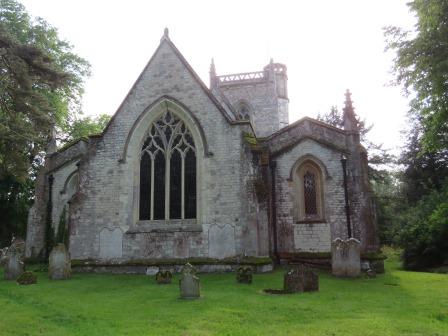
A few weeks ago we visited the gardens at the National Trust property at Hinton Ampner in Hampshire. Realising we were just 9 miles away from East Tisted we made a detour on the way home to visit the village of East Tisted and its church of St James.

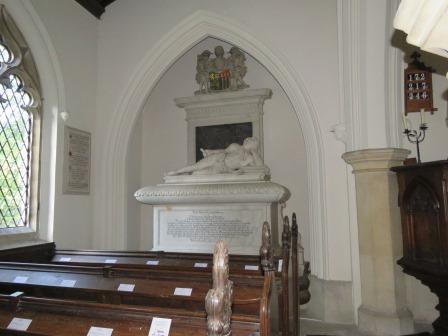
On the wall of the church we found what we were searching for - a Memorial plaque to the men of East Tisted killed in World War 1 and the first name on the plaque was Walter James Titheridge. To learn more about Walter see the last blog on 11th May.

Memorial Plaque inside East Tisted Church
Remembering Walter James Titheridge


East Tisted Church


East Tisted Church


East Tisted Church


Inside East Tisted Church


Inside East Tisted Church


Cottages East Tisted Village 


Friday, 11 May 2018

In Memory of Walter Titheridge who died in World War 1

Church at West Tisted, birth place of Walter 
Walter James Titheridge died in World War l in France on 11 May 1918, 100 years ago. This is his story.

Walter Titheridge’s Family 


Walter James Titheridge was born in West Tisted in 1898. He was the five times Great Grandson of John Titheridge and Ann Quallat of Cheriton. Walter was the youngest of six children born on 19 November 1898 to George Titheridge and Fanny Cooper of West Tisted. George and Fanny's children were:-

William George Titheridge born 1882 died 1962, married Daisy Ruffle
Dorothy Blanche Titheridge born 1887, married William Andrews
Albert Titheridge born 1890 died 1972, married Agnes Legg
May Titheridge born 1893, married Albert Whatmore
Ada Pamphylla Titheridge born 1896, married Thomas Bone
Walter James Titheridge born 1898 died 1918


On the 1901 census Walter was living with his parents and siblings at Upper Cottages New Tisted, and on 1911 census he was living with his parents and siblings at East Tisted. School records show he attended the school in East Tisted, starting on 11 January 1904 and leaving on 20 December 1912, age 14 to “go to work”. We do not know what his employment was.

Somerset Light Infantry


At some time during World War 1 Walter enlisted in Prince Albert's Somerset Light Infantry, 6th Battalion. He enlisted at Alton, army number 29310, but I have been unable to find the date of his joining up.

The 6th Battalion Somerset Light Infantry went to France in May 1915 and served on the Western Front throughout the war. In 1916 they fought at Delville Wood and Flers-Courcelette in the Battle of the Somme. In 1917 they were involved in the German retreat to the Hindenburg line, the Arras offensive and the Third Battles of Ypres. In 1918 the battalion suffered heavy casualties in The Battle of St Quentin and The Battle of the Avre.

21st March 1918


On 21 March 1918 the Germans began the Spring Offensive, a series of German attacks along the Western front in the Somme battlefield. The Battle of St Quentin took place from 21 March to 23 March with 72 German divisions in positions ready to attack in three waves. The British suffered a five hour artillery bombardment by over 6,600 artillery pieces with some 3.2 million shells landing on the British-held front during that first day of the attack. The German attack was assisted by the fog in the Somme battlefield with the British unable to see the movement of the Germans. Thousands of infantrymen left the German Front Line and appeared in the British forward positions without being seen. The 6th Battalion Somerset Light Infantry were part of the 14th Light division and were in the front line as the battle commenced. The explosives cut off telephone communication and the fog meant flares could not be used to communicate, hence the British troops in the front line were unable to communicate and call for artillery support. On 21st March 1918 the British suffered more than 38,000 casualties, the second worst day of losses in British military history.

6th Battalion SLI War diary for 21 March 1918


The last hours of the 6th Battalion Somerset Light Infrantry are recorded in the Battalion War Diary.
During March the Battalion were at Monteslourt, France
19th March
In the line   - Quiet 24 hours. Patrols out all night. New fire bays constructed.
20th March
In the line     Quiet 24 hours. Patrols winning. Casualties nil
21st  March
At 4.30 am the enemy opened an intense bombardment with all calibre shells, using a new kind of gas shell, the smell of which was not unpleasant, but had the effect of sleeping gas.
At 8.30 he finished gas shelling but continued with other shells.
It was very foggy, extra sentries were posted at all points.
All signal communication was cut by 7.40am.
At 10.20 news was received by runner - the enemy was in the front line.
Support companies, Battalion HQ moved into strong points “Egypt” where fighting immediately commenced.
2 pigeons were despatched and papers all burnt.
The enemy at 10.30 were streaming down the St Quentin Road from both flanks and poured into La Fozie Quarry.
At 10.35am he was reported to be pushing towards Benay and Cerizy.
1 officer, 6 runners and 3 signallers commenced to fight their way to Brigade HQ with the news to warn strong points.
1 officer reached Brigade HQ at 11.10am 2 runners arriving 10 minutes after. 1 signaller also got out successfully. After which this party were attached to 9 Scottish Rifles in reserve trenches behind Brigade HQ.
Estimated casualties 20 officers, 540 other ranks actually in the front line at the time of attack.

It is probable that by 10.30 the 6th Battalion Somerset Light Infantry had almost ceased to exist.

Prisoner of War


Private Walter James Titheridge was one of the soldiers taken prisoner from the front lines on the 21 March 1918.  Details of this were first received in England in early July and published in a Somerset paper.
10 July 1918
Taunton Courier and Western Advertiser
The Captive Somersets
The following names have been received this week of Somersets now prisoners of war in Germany
A list of 32 names appeared in the paper among them
“29310 Titheridge”.

More information about Prisoners of War can be viewed on the website of the International Committee of the Red Cross (ICRC) . During the First World War 8 million soldiers were taken prisoner and interned in camps. In 1914 the ICRC established the International Prisoners-of-War Agency in Geneva, to which the warring States submitted, lists of prisoners. The Agency received 400,000 pages of documents: lists of prisoners’ names and records of capture, of transfers between camps and of deaths in detention. For each name listed, the Agency made out an index card. These indexes also contain enquiry cards, drawn up from the written requests for information submitted daily by relatives of the missing.

I have found 5 mentions of Walter as Prisoner of War.
  • There is a list of prisoners written in German.  Entry Number 146 shows "Titheridge Walter  gen. 6 Som.L.I. taken at Benay 21.3.18. Aus den felde. (translates to off the field). Place of birth Westtested 19.11.98."
  • In a document dated 24 July 1918 it lists Walter is mentioned again "Titheridge W 29310 SLI  Kriegslazarett"  (this translates to military hospital)
  • Another document written in German translates to "Titheridge W Private SLI without further information died 11.5.18 in field hospital in Foreste from dysentery buried at cemetery in Foreste."
  • A similar document is found at this link
  • The index card shows a request for information by Walter's mother, Fanny. The card has been updated as information is received from the Germans. It shows that the ICRC were notified of Walter being a prisoner on 3 July 1918, and notified of his death on 28 August 1918 with information communicated to the family on 1 October 1918


One cannot imagine the anguish of the family. Walter was reported as missing in March and it was July before the family  heard he was a prisoner of war. Then in October they learnt that Walter had died 3 months earlier.

Commonwealth War Grave


The Commonwealth War Grave site shows the following information for Walter:
29310 Private Walter James Titheridge. 6th Btn. Prince Albert's (Somerset Light Infantry). Age: 19. Born: West Tisted, Hants. Enlisted: Alton, Hants. Resided: East Tisted. Died. Son of George and Fanny Titheridge, of "Creeper Cottage," East Tisted, Alton, Hants. died on 11th May 1918. Buried at Foreste Communal Cemetery Plot  I B 15.

The cemetery is in Foreste, a hamlet about 15 kilometres west of St. Quentin. Foreste Communal Cemetery was used by the 92nd Field Ambulance in April 1917 but the village fell into German hands in the summer of 1918. In the cemetery are 95 UK burials of the First World War.

Walter was posthumously awarded the British War Medal and the Victory Medal.

East Tisted War Memorial


Walter is remembered on a memorial plaque that is in East Tisted church. Click here to see an image.  It reads

In honoured memory of the men of East Tisted
who gave their lives for God, King and Country
in the Great War 1914 – 1919

There are 3 names, the last one reads
Walter James Titheridge Private in Somerset Light Infantry
Died while a prisoner of war in Germany 11th May 1918

"Be thou faithful unto Death and I will give thee a crown of life” Rev 2.10

Church at East Tisted where the Memorial to Walter can be found


Wednesday, 2 May 2018

Death in the Harvest Field – Mabel Titheridge 1888 - 1889

Cottages in Frogmore, East Meon

Infant Mortality 


I was recently transcribing some Portsmouth Burials records and found 26 burial records for our family pre 1904. I was surprised to see that of 62% of these were children, with 13 of the burials children below five years old.

One of these records was the burial of Mabel Tetheridge buried at St Mary, Porchester, Hampshire on 7 August 1889 aged 18 months. No known Titheridge families lived in Porchester, so I was intrigued to find out more about Mabel and her family and find out why they were in Porchester.

Francis Titheridge from East Meon


Mabel’s father was identified as Francis Titheridge of East Meon, Hampshire. Francis was born in 1854 youngest of the fifteen children of William Titheridge and Elizabeth Lee. In the 1861 census Francis was living with his parents in Frogmore, East Meon and in the 1871 census living with elder brother William at Old Down, East Meon.

In October 1877 23 year old Francis married Emily Jane Port in East Meon and they had one child Henry Titheridge born in 1879 in Midhurst district of Sussex. On the 1881 census Emily and son Henry are living in Farlingham, near Portsmouth, but Francis is missing from the census. A year later in 1882 Emily’s death is recorded in Midhurst Sussex. No further records are found for son Henry.

Four years later in 1886 Francis married 18 year old Alice Emma Langrish 14 years his junior. Alice was from Compton near Chichester. Francis and Alice had four children.

Minnie Catherine Titheridge born 1887 in Westbourne district of Sussex
Mabel Titheridge born 1888 Droxford district christened in East Meon
Florence Mary Titheridge born 1890 in East Meon
William George Titheridge born 1892 in Westbourne district of Sussex

Mabel’s death is recorded in 1889 in Fareham aged one and Florence’s death is recorded in 1892 in Midhurst district aged 2.

The one thing noticeable is the nomadic life style of the family moving from place to place in the Sussex / Hampshire border area. Francis was a farm labourer and presumably he moved to find work. In the 1891 census Francis and Alice are living in Compton, Sussex with children Minnie aged 4 and Florence aged 1. However by 1901 Francis is living on his own in Up Marden, Sussex.  I have no idea what has happened to Alice and son William. They are not found on 1901 or 1911 census and there are no death records found. Daughter, Minnie, married William Allen in 1904 in Aldershot.

The Death of Mabel Titheridge


The question "Why was Mabel and family in Porchester" was revealed in the local newspapers. It was August 1889 and harvest time and Mabel had been brought to Porchester with her parents Alice and Francis as they came to harvest the crops on a local farm. It was here that Mabel, who was already unwell, died.  The account in the local paper is below:

Portsmouth Evening News - 6 August 1889

Death in the Harvest Field
The Deputy County Coroner (Leonard Warner, Esq.) held an inquest on Monday at the Railway Hotel Porchester, upon the body of Mabel Titheridge 18 months who died suddenly on Saturday last. The evidence showed the deceased had been unwell for the past three months and was brought to Porchester by its parents a few days since, the latter being engaged harvesting on the  farm of Mr Curtis, and whilst thus employed slept in the shepherd’s hut on the farm.  The child did not appear to be any worse but at half past eleven on Saturday night the mother heard a gargling in the child’s throat and at once took it to Dr Brake at Porchester but before arrival the child had died. Medical evidence showed that death had arisen from natural causes and the Jury returned a verdict to that effect.

If you can add any details about this family please get in touch email: titheradgegenealogy@gmail.com

The story of Francis’s life after Mabel’s death will be the subject of later blog.

Saturday, 14 April 2018

In Memory of James Francis Charles Titheridge 1897 – 1918

Today we remember James Francis Charles Titheridge who died 100 years ago today aged 20.

James Francis Charles Titheridge


James was the six times great grandson of John Titheridge and Ann Quallatt of Cheriton, his ancestors were the Titheridges of Kilmeston.  James was born in the September quarter of 1897, the only son of James Titheridge and Gertrude Moss Midwinter. James’s mother Gertrude was from Hartley Wintney, Hampshire a small village 8 miles east of Basingstoke and it is in this village James was born.

In 1891 James’ father worked as a footman, in 1901 he was a servant and in 1911 he was a butler. The family moved around as James found employment with different employers. In 1901 the family were living at 5 Amity Terrace, Wimbledon, Surrey and in 1911 they were living at Rose Cottage, Holme Lacy, Herefordshire. Holme Lacy is a small village 6 miles south east of Hereford. By 1918 James’s parents, Gertrude and James, had moved 2 miles south to 2 West Villas, Fownhope, Herefordshire.

Military Service


James enlisted at Hereford in the King’s Shropshire Light Infantry, 1st Battalion (regimental number 25489) and was quickly promoted to the rank of Corporal.  I cannot find exactly when James enlisted but he probably enlisted in early 1916 and he arrived in France about August 1917.

The 1st Battalion Shropshire Light Infantry served entirely on the Western Front and in just about every major engagement. 1914 – 1916 saw the battalion in fighting in the Ypres area. They saw service on the Somme in 1916 and at Arras and Cambrai in 1917. By the start of 1918 James had been in France for about 4 months and in January of this year, the battalion was serving with the 5th Army. On March 21st, with the battalion just about annihilated at Lagnicourt, not one combatant officer was left and only 53 other ranks came out of the action. The battalion was completely re-formed within ten days of being virtually destroyed and was back in the line at Ypres and fought continuously in the salient until late August.

Killed in Action


James is reported as killed in action on 14 April 1918, three weeks after the devastating battle at Lagnicourt. Referring to the battalion war diaries on this date the battalion were at Molenaarelst Hoek 10km east of Ypres and 3km south of Tyne Cot. The diaries do not indicate any action on this date but the circumstances of his death are recorded in a home newspaper report.

Hereford Times 11 May 1918

Roll of Honour
Killed
Corporal J. F. C. Titheridge, Fownhope
Mr. and Mrs. Titheridge, of Fownhope, formerly of Holme Lacy have just suffered the loss of their only child, Corporal J. F. C. Titheridge, King’s Shropshire Light Infantry, who was killed in France on April 14th. He was sitting just inside a dug out with a comrade when a shell dropped at the side of the entrance and blew back into the dug-out. He was hit on the head and killed instantaneously, and a man sitting next him was wounded. The Lieutenant of his company says he was a trustworthy N. C. O. and very keen at his work. Corporal Titheridge, who was an old boy of Hereford Bluecoat School, had been in France about eight months. He joined up at 18 and was 20 years of age at the time of his death. With Mr and Mrs Titheridge in their bereavement much sympathy is expressed.

His medal card shows he was posthumously awarded the Victory Medal and British Medal.

He is remembered on the Tyne Cot Memorial, Zonnebeke, West Flanders, Belgium. The Tyne Cot Memorial is around the eastern boundary of Tyne Cot Cemetery near the town of Leper in Belgium. It bears the names of some 35,000 men of the British and New Zealand forces who have no known grave, nearly all of whom died between August 1917 and November 1918.

James is also remembered at the village memorial at Holme Lacy, Herefordshire. A picture can be seen here.

Gertrude and James 


Gertrude and James continued to live in Fownhope at 2 West Villas until their death.  James died in 31 January 1939 and Gertrude died in 14 January 1954 aged 79. They are buried in St Mary’s Fownhope. On Gertrude’s death probate (£548) was given to her niece Elsie Pavey.


They shall grow not old, as we that are left grow old:  
Age shall not weary them, nor the years condemn.
At the going down of the sun and in the morning,
We will remember them.


Saturday, 7 April 2018

Proclamation of Queen Victoria as Empress of India 1877


George Sutton Titheradge (1848 - 1916)
Famous Victorian Actor 

Proclamation of Queen Victoria as Empress of India 1877


Early in our family research we learnt that it was George Sutton Titheradge who proclaimed Queen Victoria as Empress of India. He was born in Portsmouth and lived from 1848 to 1916. He became a famous Victorian actor in England and Australia.

The information came from an article published in The Australian Dictionary of Biography. It said:
“In 1876 George joined the Chippendale Classical Comedy Company and late that year he played Hamlet at the Corinthian Theatre, Calcutta. He was the herald at Lord Lytton's durbar in Delhi and on 1 January 1877 announced Queen Victoria as Empress of India”

Delhi Durbar


The Delhi Durbar was a mass assembly organised by the British at Coronation Park, Delhi, India. It took place on 1 January 1877 to proclaim Queen Victoria as Empress of India. The Durbar was an official event attended by Lord Lytton, who was Viceroy of India, royalty from all the provinces of India and the senior British dignitaries; nearly 70,000 people attended. It was an extravaganza of pomp and ceremony.

A report at the time in the Illustrated London News gave the following description
“The Viceroy, who was accompanied by Lady Lytton and his daughters, ascended the dais and took his seat on the Imperial throne. The heraldic trumpeters sounded a flourish, and the Chief Herald, read the Imperial Proclamation in English; a translation in the Urdu language was read by the Foreign Secretary to the General Government of India. A salute of one hundred and one guns was fired by the artillery, and a feu de joie by the infantry. The Viceroy then delivered his speech, explaining the motives and consequences of this great political act. The National Anthem was played by all the military bands.”

Paintings of occasion by Prinsep can be seen at this link

 Conflicting stories


Nowhere was George Sutton Titheradge mentioned in the newspaper or other historical accounts of the event and I began to doubt the accuracy of my information. I found numerous images of the durbar, one showed the herald but he did not look like George. Later I found another picture with the label “The Imperial Assembly at Delhi: The Chief Herald (Major Barnes) Reading the Proclamation”. You can see it at this link . So if Major Barnes was the Chief Herald how did George fit in with this story?

In some old Australian newspapers from 1903 I found others questioning whether George, really had had the honour of proclaiming Queen Victoria Empress of India at the Delhi Durbar. The story quoted Mr Robert Howlett who said “In October 1876 I was stationed at Lucknow as trumpeter in the 13th Hussars, and I received instructions to proceed to Umballa for the purpose of being attached to the 11th Hussars, as I had been selected to act as one of the heralds at the Durbar at Delhi. Every other cavalry regiment in Bengal was also required to send a trumpeter.  At Umballa, we rehearsed the flourish of trumpets. In December we went to Delhi, and were attached to the staff of the Viceroy (Lord Lytton), who was present at the proclamation of the Empress at Delhi on January 1. The proclamation was read by Major Barnes, of the Native Cavalry, who was a clever linguist. He read the proclamation in English, Persian and Hindustani.”

Something was wrong with our original story about George. It was one of those puzzling queries I kept coming back to and it is only recently that I have sorted out the mystery.

Proclamation at Calcutta


The clue came in an English newspaper reference that said the formal proclamation took place on New Year’s Day 1877 at Calcutta, Bombay, Madras and Delhi.

An article in an Australian newspaper gave the answer,George read the proclamation not at the big Durbar in Delhi but at another proclamation in Calcutta:

The Express and Telegraph (Adelaide, SA) 8 January 1903. 

“Mr. F. H. Pollock, lessee and manager of the Theatre Royal, Adelaide, said: "Titheradge and I went out from England together for the season at the Corinthian Theatre, Calcutta, just before the durbar in 1877. He was leading man, and I was managing. Titheradge was a fine elocutionist, and he was chosen by Lord Lytton, who was then Viceroy of India, to read the proclamation. The appointment caused a lot of jealousy. Titheradge after wards received a parchment roll from the authorities at home. It was signed by Queen Victoria, and expressed her Majesty's thanks for his services at the durbar. Titheradge read the proclamation from a platform erected on the Midan (an open space), in the presence of-a-vast crowd. Every person in our theatrical company had a ticket for a seat close to the platform. This was at Calcutta not Delhi.”

A picture of the occasion can be found at this link .

George Suttton Titheradge’s Personal view


George Sutton Titheradge
(1848 - 1916)
Some newspaper interviews with George later in his life confirmed that he read the proclamation at Calcutta.

Evening News (Sydney NSW)  12 June 1897

“While I was in India I had a very curious experience. I was engaged by the Indian Government as the Herald to read the proclamation of Her Majesty as Empress of India at Calcutta. It was the first time I had ever spoken in the open air. I have often won bets since about the number of people I have addressed at once, as the largest theatre only hold from 3000 to 4000 people. I always win. I should say there were at least 200,000 people present including troops.”

Sunday Times (Sydney NSW) 29 June 1913

 “It is with, a feeling of pride, that I recall the fact that it was my voice which pronounced the words proclaiming Queen Victoria to be the Empress of India. Hanging on the wall of my study, is a framed testimonial, presented to me by the Government of India, in honour of the occasion, and whenever my eye falls on it pleasant memories of my roving past float before me. It is the one link that binds me to a land where I spent many happy years.”

The testimonial referred to above read "Under command of his Excellency the Viceroy and Governor-General this certificate is presented in the name of her most gracious Majesty Victoria, Empress of India, to George Sutton Titheradge Esq, in recognition of his distinguished service as herald at the Durbar held for the Proclamation of the Imperial title at Calcutta, on January 1, 1877."